Milk Thistle in FitSpresso: Liver Support Claims Checked
Milk thistle seed extract (80% silymarin) is part of FitSpresso’s 112 mg blend, included for liver support. The evidence for that role is weak, and the amount is undisclosed.
Check the Current Price →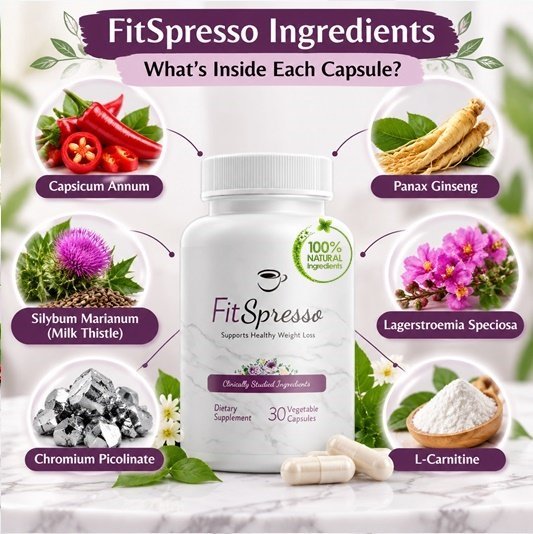
| Also known as | Silybum marianum; active mixture: silymarin |
|---|---|
| Amount in FitSpresso | Undisclosed share of a 112 mg blend (extract 80% silymarin) |
| Role in FitSpresso | Liver support |
| Evidence | Weak for liver support |
| Main side effects | Bloating, nausea, gas |
| Interactions | Talk to your doctor if you take any medicine; ragweed-family allergy |
What is milk thistle?
Milk thistle is a purple-flowered plant native to Europe. Its seeds yield silymarin, a mixture of compounds that is the main active component of extracts. It has been used historically for liver disorders and is promoted today for liver problems, diabetes and other conditions.
What the research shows
NCCIH summarises clinical trials for liver diseases as conflicting or too limited for conclusions, and two NCCIH-funded trials (hepatitis C and non-alcoholic steatohepatitis) found no benefit from silymarin. A small number of studies, mostly from the Middle East, suggest it may help blood-sugar control in type 2 diabetes. We found no good evidence that it helps weight loss.
Quality concerns
NCCIH notes some milk thistle supplements have contained silymarin amounts very different from the label, or contaminants such as pesticides or mycotoxins. This is a market-wide issue rather than a known FitSpresso problem.
Side effects and safety
- Generally well tolerated; most common side effects are bloating, nausea and gas.
- May cause allergic reactions in people allergic to ragweed, chrysanthemum, marigold or daisy.
- Little is known about safety in pregnancy and breastfeeding.
What this means for you
Milk thistle is the first ingredient listed in the blend, so it is likely present in the largest amount among the five, but the whole blend is only 112 mg. Studies of silymarin for liver conditions have often used hundreds of milligrams a day. If liver health is your main concern, FitSpresso is not the right product: talk to your doctor, especially as FitSpresso’s green tea extract is itself occasionally linked to liver problems. If you have a ragweed-family allergy, the small amount may still be relevant.
Bottom line
Milk thistle is a low-risk, low-evidence supporting ingredient in FitSpresso. It should carry little weight in your decision.